
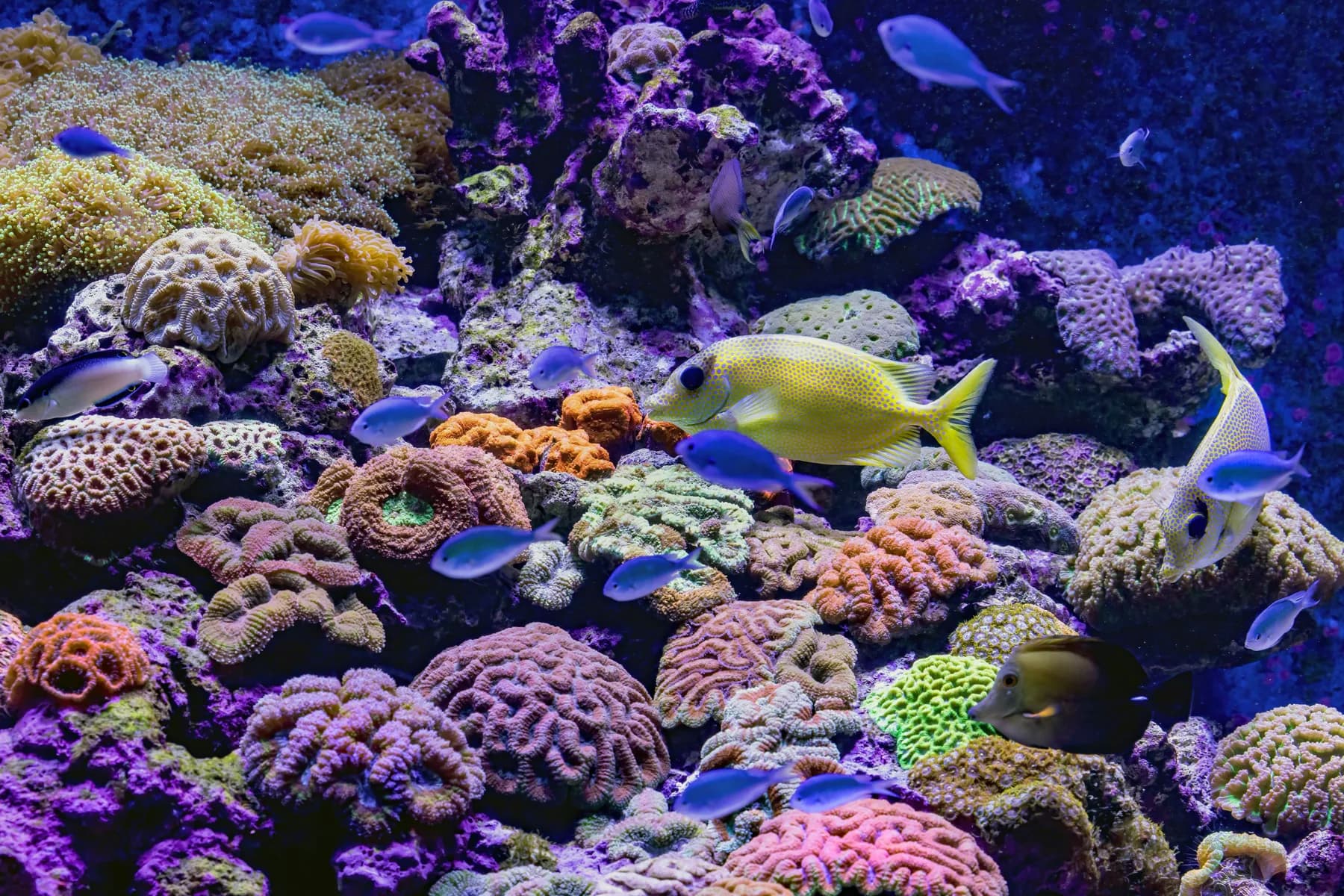
Short Answer
- LPS coral identification should start with how the tissue sits on the skeleton: branching, wall, plate, brain-like, or individual fleshy polyps.
- Polyp shape, tentacle profile, mouth placement, and visible skeleton are stronger ID clues than color.
- Use side-angle photos because top-down shots often hide branch bases, wall structure, and colony edges.
- AI can narrow likely LPS groups, but final confidence should come from skeleton and tissue structure.
What makes an LPS coral identifiable?
Large-polyp stony corals are identified by the relationship between fleshy tissue and hard skeleton. In aquariums, tissue expansion can hide the skeleton, so the best ID process waits for enough structure to be visible.
A good LPS ID does not start with the most fluorescent color. It starts with whether the coral grows as branches, a wall, a plate, a brain-like colony, or separate fleshy polyps.
- Branching forms often show repeated heads on skeletal branches.
- Wall forms show continuous tissue along a ridge or wall-like skeleton.
- Plate or brain-like forms show broad colony structure with valleys, ridges, or folds.
- Single-polyp forms often need mouth placement, edge shape, and tissue expansion for context.
Practical LPS identification signals
| Signal | What it tells you | Photo tip |
|---|---|---|
| Skeleton layout | Separates branching, wall, plate, and brain-like groups. | Use a side angle and include the base or colony edge. |
| Polyp thickness | Helps distinguish fleshy expansion from thin tissue cover. | Photograph during normal daytime extension, not just feeding. |
| Tentacle profile | Useful for Euphyllia/Fimbriaphyllia-style comparisons. | Reduce flow briefly if tips are blurred. |
| Mouth placement | Supports ID for brain-like and single-polyp LPS. | Use a clear top-down image after structure is documented. |
A simple LPS photo workflow
LPS corals change shape throughout the day, so a useful ID set should show normal expansion and structure.
- Take 1 normal daytime photo when the coral is neither fully retracted nor in feeding response.
- Take 1 side angle showing branch, wall, or colony edge structure.
- Take 1 reduced-blue image so tissue boundaries and skeleton clues are easier to see.
- If the coral changes shape often, compare photos across 3-7 days before forcing a label.
Common LPS confusion patterns
Most LPS misidentification happens when tissue expansion hides skeleton clues or when a trade name implies a more precise label than the photo supports.
- Hammer, frogspawn, and torch corals can overlap when tentacle tips are distorted by flow.
- Young branching frags may not show mature spacing or head shape yet.
- Feeding-response photos can exaggerate tentacle and tissue shape.
- Vendor color names are weak evidence unless structure also matches.
Try Coral Identifier on your own tank photos
Capture a clear photo, review likely matches, and build better coral ID confidence over time.


Sources
References and further reading
FAQ
Frequently asked questions
01What is the best first step for LPS coral identification?+
Start with skeleton layout and growth form: branching, wall, plate, brain-like, or single fleshy polyp. This gives a more reliable direction than color.
02Why are side-angle photos important for LPS ID?+
Side angles reveal branch bases, wall profiles, and colony edges that top-down photos often hide. Those structure clues are central to LPS identification.
03Can LPS corals be identified while feeding?+
Feeding-response photos can be useful, but they may exaggerate tissue and tentacle shape. Normal daytime extension is usually better for ID.
04When should I keep an LPS ID broad?+
Keep the ID broad when the coral is a fresh frag, skeleton is hidden, flow distorts tentacles, or several groups share similar visible traits.