
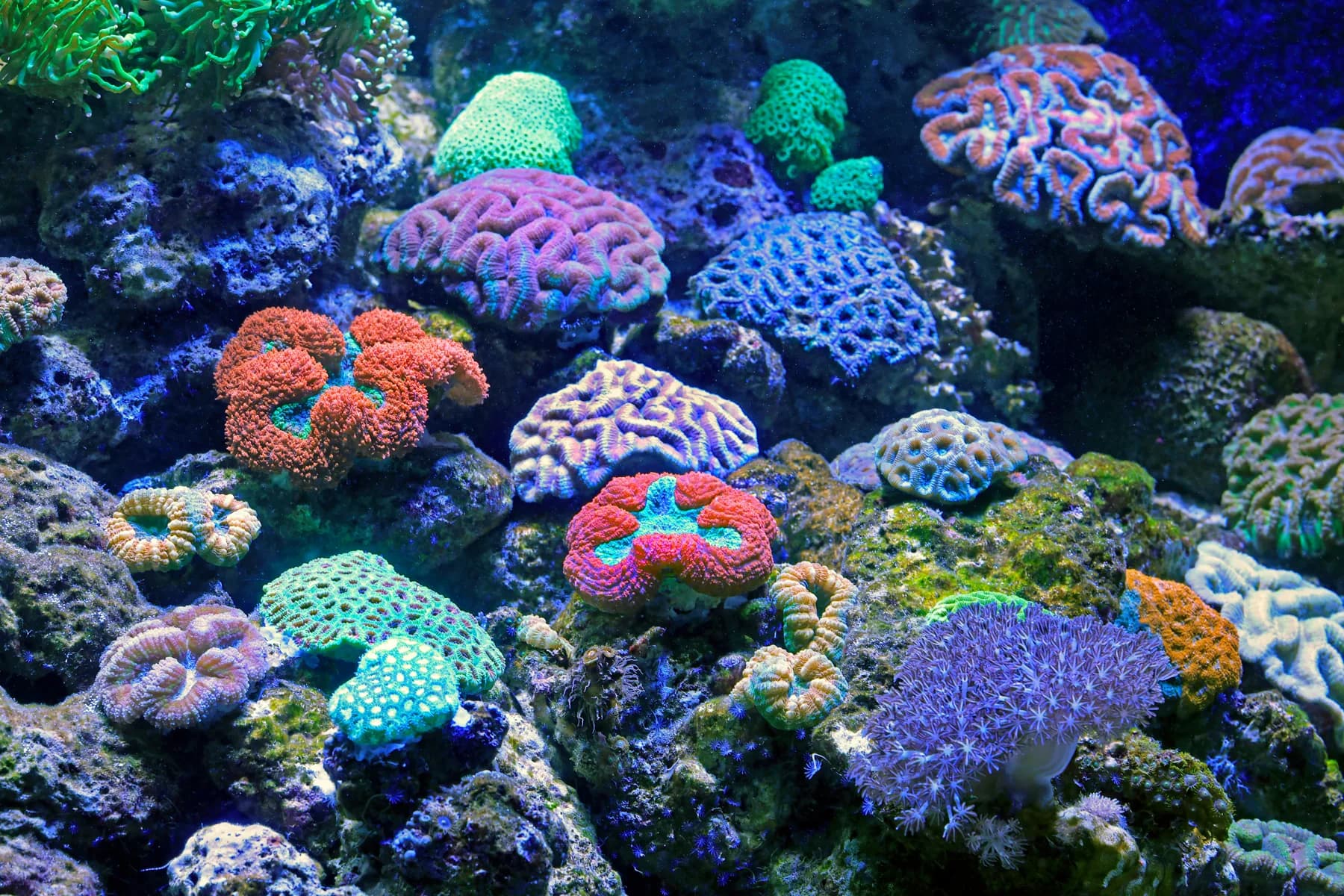
Short Answer
- Start with coral structure, not color. Growth form, polyp shape, and visible skeleton are more reliable than trade names.
- Use AI as a shortlist tool, then verify the result with photos from multiple angles and trusted reef references.
- Do not force species-level certainty from one blue-light photo. A careful genus or group-level ID is often the better answer.
- Track the same coral over 2-6 weeks. Growth behavior often resolves confusion that a single frag photo cannot.
The best coral ID method in practice
The strongest coral identification workflow is not a single app result or one forum answer. It is a repeatable process that starts with visible morphology and uses every other clue as supporting evidence.
That matters because reef photos are easy to misread. Heavy blue light, camera processing, flow, and frag maturity can make unrelated corals look similar. A structure-first workflow reduces those false matches.
- Classify the broad growth form first: branching, plating, encrusting, wall, or clustered polyps.
- Review polyp and tentacle shape before comparing color names.
- Use AI suggestions to build a shortlist, not to close the case.
- Validate the shortlist with more photos, care context, and trusted references.
How to identify coral from a photo in five steps
For a useful first answer, work through these checks in order. Stop at the broadest label the photo can support instead of forcing a species name.
| Step | What to inspect | Useful outcome |
|---|---|---|
| 1. Growth form | Branching, plating, encrusting, wall, mat, or solitary polyp. | Narrows the coral to a practical visual group. |
| 2. Polyps and tentacles | Shape, spacing, tip form, oral disc, and extension. | Separates common LPS, SPS, zoanthid, and soft-coral lookalikes. |
| 3. Base or skeleton | Branch, wall, corallites, growth edge, or attachment. | Adds evidence that color alone cannot provide. |
| 4. Photo context | White balance, flow, viewing angle, frag maturity, and scale. | Reveals whether lighting or movement is distorting the clues. |
| 5. Verification | Compare multiple photos, references, and changes over time. | Produces a likely ID with an honest confidence level. |
Photo checklist before asking for an ID
Better photos usually improve the answer more than a longer description. Before you rely on any identification, capture enough context for the coral to be evaluated fairly.
- One photo under normal display lighting.
- One photo with blues reduced or white balance corrected.
- One side angle showing the base, branch, wall, or colony edge.
- One medium-distance shot showing colony context and surrounding growth.
- A short note about flow, lighting, and whether the coral is a new frag or established colony.
Coral identification chart: what kind of coral is this?
Use this chart to choose a starting group from your photo. These are visual clues, not a species diagnosis. Follow the matching guide below the chart to compare more details.
| What you can see | First label to try | What to check next |
|---|---|---|
| Long flowing tentacles with distinct tips | Torch, hammer, frogspawn, or related LPS | Compare tip shape, branch or wall base, and movement in moderate flow. |
| Small polyps growing as a mat or colony | Zoanthid, palythoa, or similar colonial polyp | Compare oral disc pattern, skirt shape, mouth color, and colony mat. |
| Branching, plating, or encrusting hard structure | SPS or encrusting/plating stony coral | Check growth form, corallite texture, branch tips, and base structure. |
| Soft, leathery, or mushroom-like tissue | Soft coral, mushroom, or leather coral | Review surface texture, stalk shape, polyp extension, and spread behavior. |
Which visual signals matter most?
Not every visual clue carries the same weight. This table is a practical order of operations for reef hobbyists.
| Signal | Why it matters | Common trap |
|---|---|---|
| Growth form | Separates broad groups quickly and reliably. | Judging from top-down photos only. |
| Polyp and tentacle shape | Helps distinguish similar LPS, zoanthids, and soft corals. | Letting flow distort the visible shape. |
| Skeleton or base structure | Adds confidence for stony coral groups. | Ignoring the base because the top color is more attractive. |
| Color pattern | Useful after structure narrows the options. | Treating blue-light fluorescence as a stable identifier. |
| Growth over time | Reveals traits that young frags may hide. | Expecting a one-day answer from an immature frag. |
Where AI helps and where it should stop
AI coral identification is useful when it speeds up the first pass. It can turn an unknown photo into a practical shortlist and point you toward traits worth checking next.
The mistake is treating that shortlist as final. The safer workflow is to compare the suggested candidates against morphology, then keep a confidence note in your tank records.
A simple decision rule
If the evidence is mixed, choose the lower-risk label. A broad but honest ID is more useful than a precise name that is probably wrong.
- Use group-level labels when structure is visible but species traits are not.
- Use genus-level labels when multiple traits align but trade-name evidence is weak.
- Use species or morph names only when morphology, history, and references agree.
Try Coral Identifier on your own tank photos
Capture a clear photo, review likely matches, and build better coral ID confidence over time.


Next steps
Related reef tools
Sources
References and further reading
FAQ
Frequently asked questions
01Can AI identify a coral from one photo?+
It can often suggest likely matches from one clear photo, but one image is rarely enough for a confident final ID. Multiple angles and lower-blue lighting make the result more useful.
02Should I identify coral by color first?+
No. Color is heavily affected by lighting, camera processing, nutrients, and coral health. Start with growth form, polyp shape, and skeleton clues, then use color as supporting evidence.
03When is genus-level identification enough?+
Genus or group-level identification is enough when the coral is immature, the photo lacks structural detail, or several species look similar in aquarium conditions.
04What should I do if two IDs both seem plausible?+
Keep both candidates in your notes, improve the photo set, and compare growth over several weeks. For care decisions, follow the more conservative requirements until the ID is clearer.
05What kind of coral is this if I only have one photo?+
Use the single photo only for a broad first label, such as LPS, SPS, zoanthid, mushroom, or soft coral. Then take a reduced-blue photo and a side angle before trusting a narrower ID.