1
Decision-focused
Each tool starts from a real reef task, from preparing saltwater to checking coral compatibility.
Free reef tools - 12 calculators
12 free tools for planning a reef tank, preparing saltwater, and making better-informed coral care and placement decisions.
Browse all 12 toolsTool directory
Start with coral care or jump to the setup calculation you need.
Check coral requirements, compatibility, spacing, light, flow, and placement before making a change in the reef tank.
Coral care
Look up typical care requirements for common soft corals, LPS and SPS.
Coral care
Check whether coral pairs or a new coral plan are likely compatible in your reef tank.
Coral care
Check coral spacing risk from coral type, distance, expansion, flow, growth, stress signs, and shading.
Coral care
Check coral flow requirements and direct-blast risk from coral type, polyp movement, and detritus signs.
Coral care
Check whether measured or estimated reef tank PAR is likely low, high, or in range.
Coral care
Match a coral's likely light and flow needs to the right zone in your aquascape.
Plan usable water volume, rock, sand, saltwater mixing, salinity, and water changes.
Aquascape planning
Estimate live rock, dry rock, mixed rock, box count and displacement from display volume, aquascape style and rock density.
Substrate planning
Estimate reef sand, live sand and bag count from tank footprint, depth, coverage, sand type and livestock context.
Water volume
Estimate actual water volume from tank shape, water height, displacement, sump operating volume, and water change percentage.
Water changes
Estimate water change volume, bucket count, nitrate or phosphate dilution, repeated changes, salinity adjustment and automatic daily schedules.
Saltwater salinity
Convert specific gravity to ppt, ppt to specific gravity, and compare current vs target salinity.
Saltwater mixing
Estimate dry reef salt mix from water volume, current salinity, target salinity, and salt mix type.
Choose the situation that best matches the job in front of you. Each tool turns familiar reef tank observations or measurements into a practical planning result.
Estimate actual water volume first, then plan live rock and sand around the usable footprint and aquascape you want to build.
Use: Reef Tank Water Volume Calculator, Live Rock Calculator, and Reef Sand Bed Calculator.
Convert salinity readings, calculate a salt mix batch, or plan routine and corrective water changes from your tank's actual water volume.
Use: Reef Salinity Converter, Reef Salt Mix Calculator, and Reef Water Change Calculator.
Start with the broader care profile, then check whether the available light and flow are a sensible starting match for that coral.
Use: Coral Care Requirements Lookup, Coral PAR Calculator, and Coral Flow Requirements Finder.
Compare care overlap before adding a coral, then assess direct-contact, sweeper, overgrowth, shading, and chemical-interaction risks.
Use: Coral Compatibility Checker and Coral Aggression & Spacing Checker.
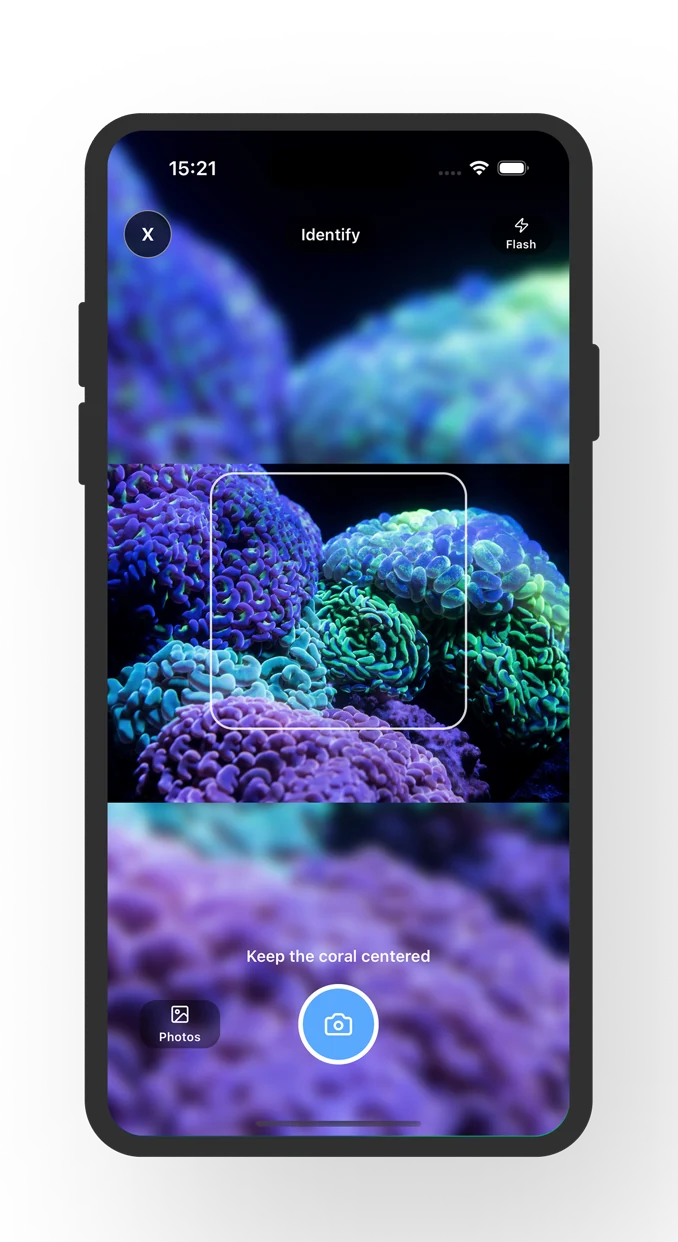
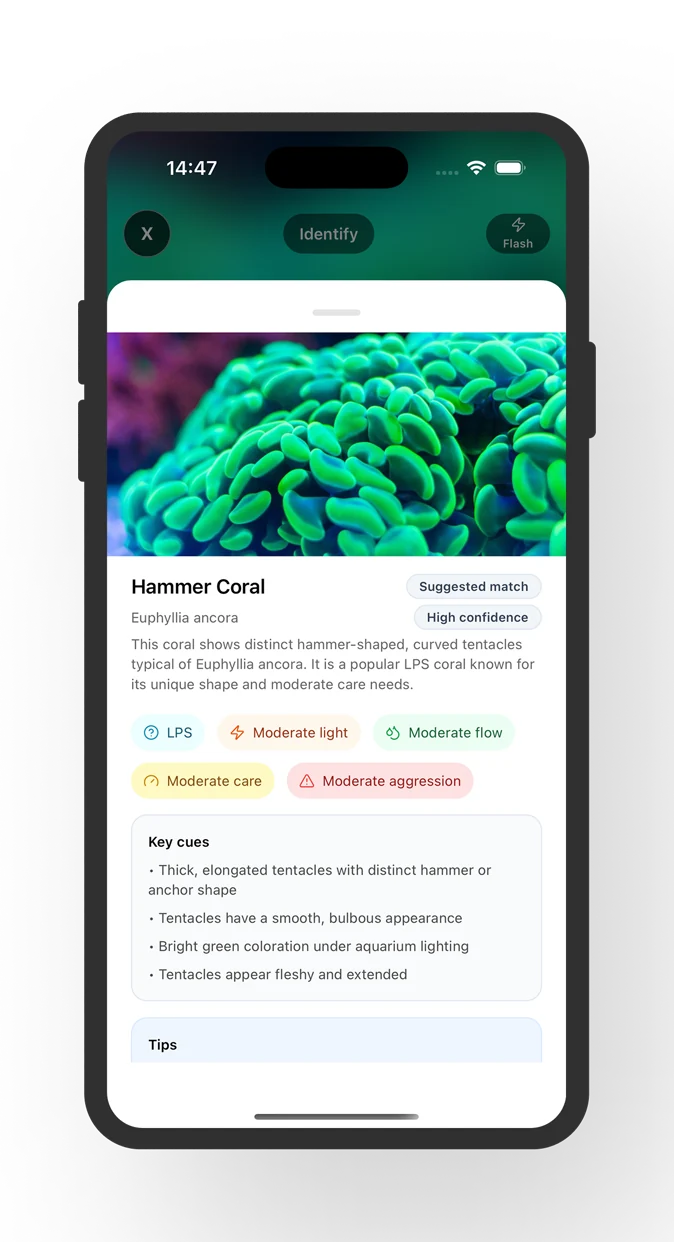
Combine light, flow, aggression, and tank zone into a conservative first position. If the coral ID is uncertain, identify it before making major changes.
Use: Coral Placement Finder, Coral Identifier, Coral Guides, and the Coral Database.
Every result should be treated as planning guidance, not a guarantee. Reef tanks vary by rockwork, lighting spectrum, water clarity, coral history, flow patterns, and maintenance habits. Use the calculators to avoid rushed decisions, then verify important changes with trusted reef references and careful coral observation.
1
Each tool starts from a real reef task, from preparing saltwater to checking coral compatibility.
2
Short guidance helps you choose the right tool and understand where an estimate has limits.
3
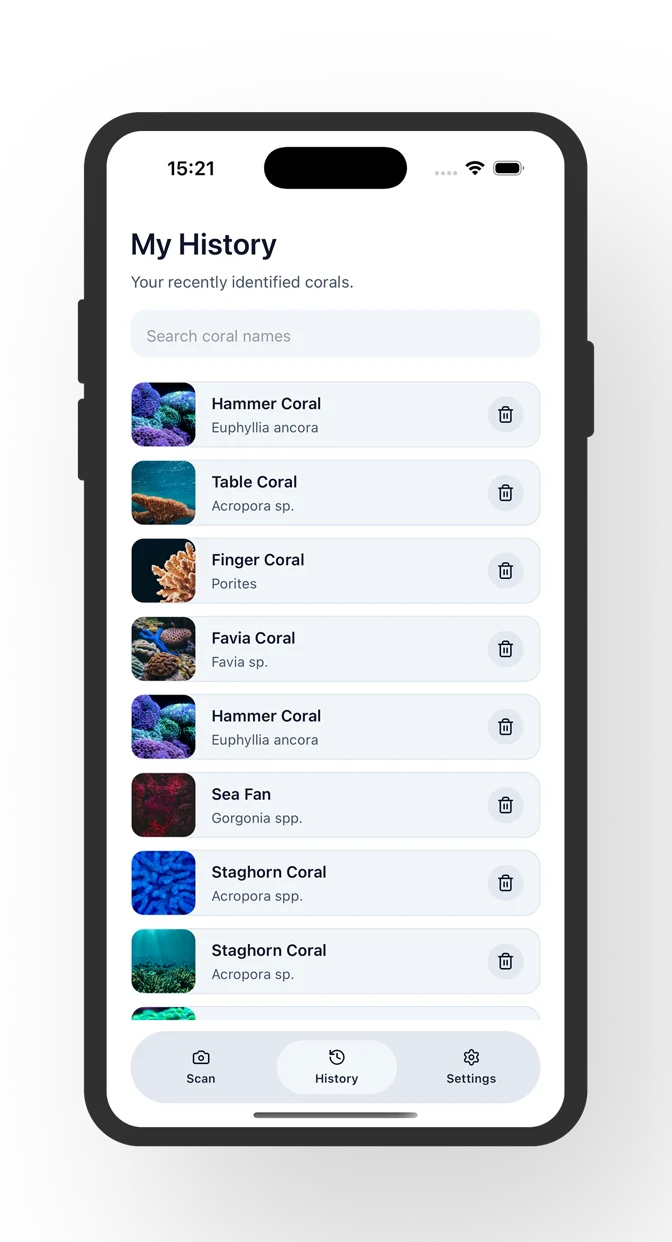
Use the result on the web, then continue with photo scans and saved coral history in the app.
Coral Identifier
Calculators help with the setup. The app helps when you are looking at a coral and need a practical photo-based starting point.