
Short Answer
- Elegance coral usually needs open space, gentle-to-moderate flow, and careful light acclimation.
- Start lower or moderate in the tank rather than blasting it with SPS-level light immediately.
- Feed small meaty foods occasionally, but do not let uneaten food rot in the tissue.
- Avoid damaged specimens with receding tissue, exposed skeleton, gaping mouths, or poor expansion at purchase.
Elegance coral placement
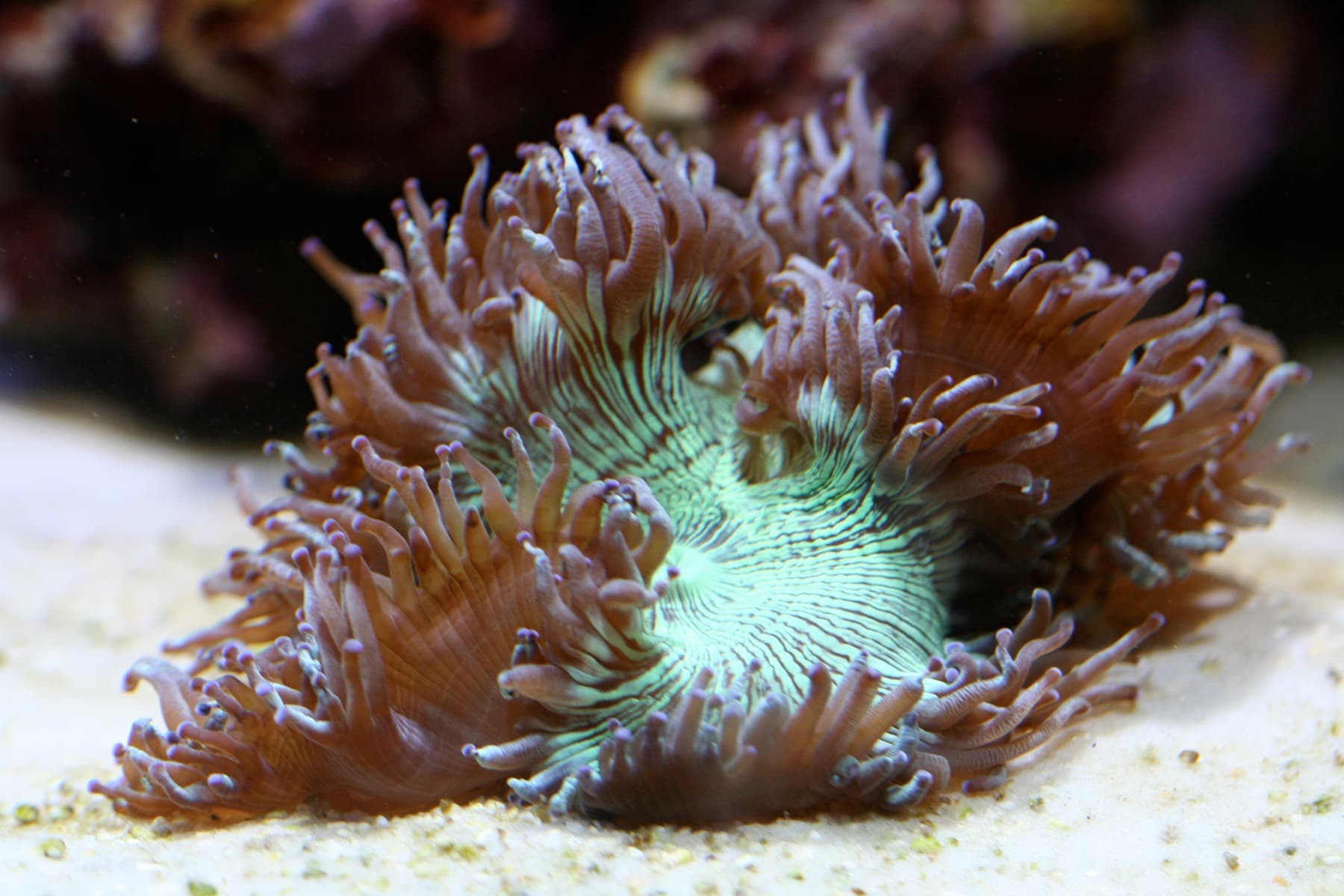
Elegance coral expands far beyond its skeleton, so placement must account for full extension. It should not rub against sharp rock or get pinned down by strong flow.
Many reef keepers place elegance corals on sand or lower rockwork with room around the tissue. The exact spot depends on the specimen, but stability and space matter more than forcing it into a crowded display gap.
Elegance coral care starting points
| Care factor | Starting point | Risk signal |
|---|---|---|
| Light | Low-to-moderate or moderate; acclimate slowly. | Tissue shrinking, bleaching, or refusing to expand. |
| Flow | Gentle-to-moderate indirect flow. | Tissue whipped, folded, or held against skeleton. |
| Feeding | Small meaty foods occasionally. | Food trapped and decaying in tissue. |
| Space | Several inches around full expansion. | Contact with stinging neighbors or rock abrasion. |
Buying checks before you bring one home
- Avoid specimens with visible tissue recession or exposed skeleton around the edges.
- Avoid gaping mouths, torn tissue, or repeated failure to expand at the store.
- Ask how long the coral has been in the store and whether it has been stable.
- Check whether the skeleton edge is sharp against inflated tissue.
Warning signs after placement
A new elegance coral may take time to settle, but persistent shrinking, tissue peeling, brown jelly-like decay, exposed skeleton, or a gaping mouth are not normal settling signs.
If problems appear, check flow and contact points first. A coral that is constantly rubbed, blasted, or shaded may decline even if water numbers look acceptable.
How to read flow from the tissue
Elegance coral should move, but it should not fold, whip, or stay pinned to one side. The tissue gives better feedback than a pump percentage setting.
- Good flow: tentacles sway and the oral disc stays inflated.
- Too much flow: tissue pulls tight, folds over the skeleton, or refuses to expand.
- Too little flow: debris settles between tentacles and tissue looks dull or irritated.
A simple decision tree for the first two weeks
- Expands daily and tissue is full: keep the placement stable and avoid unnecessary moves.
- Inflates but retracts hard in flow: reduce direct flow before changing light.
- Mouth gapes and tissue thins: stop feeding large pieces and check basic water stability.
- Skeleton shows through at the edge: treat it as urgent tissue recession, not normal adjustment.
Try Coral Identifier on your own tank photos
Capture a clear photo, review likely matches, and build better coral ID confidence over time.
Identify on the App StoreSources
References and further reading
FAQ
Frequently asked questions
01Where should I place elegance coral?+
Give it open space, gentle-to-moderate indirect flow, and careful light acclimation. Many specimens are placed on sand or lower rockwork.
02Is elegance coral good for beginners?+
It is usually not the first LPS coral I would choose for a beginner. It can be sensitive to damage, poor placement, and decline signs.
03How often should I feed elegance coral?+
Feed small meaty foods occasionally if the coral accepts them. Avoid large chunks and remove uneaten food.
04Why is my elegance coral shrinking?+
Check direct flow, light shock, tissue contact with rock, nearby coral aggression, pests, water swings, and signs of tissue recession.
05Should elegance coral be moved if it does not open on day one?+
Not automatically. Check flow, tissue position, and light shock first. Repeated moves can add stress unless there is clear tissue damage or direct aggression.