
Short Answer
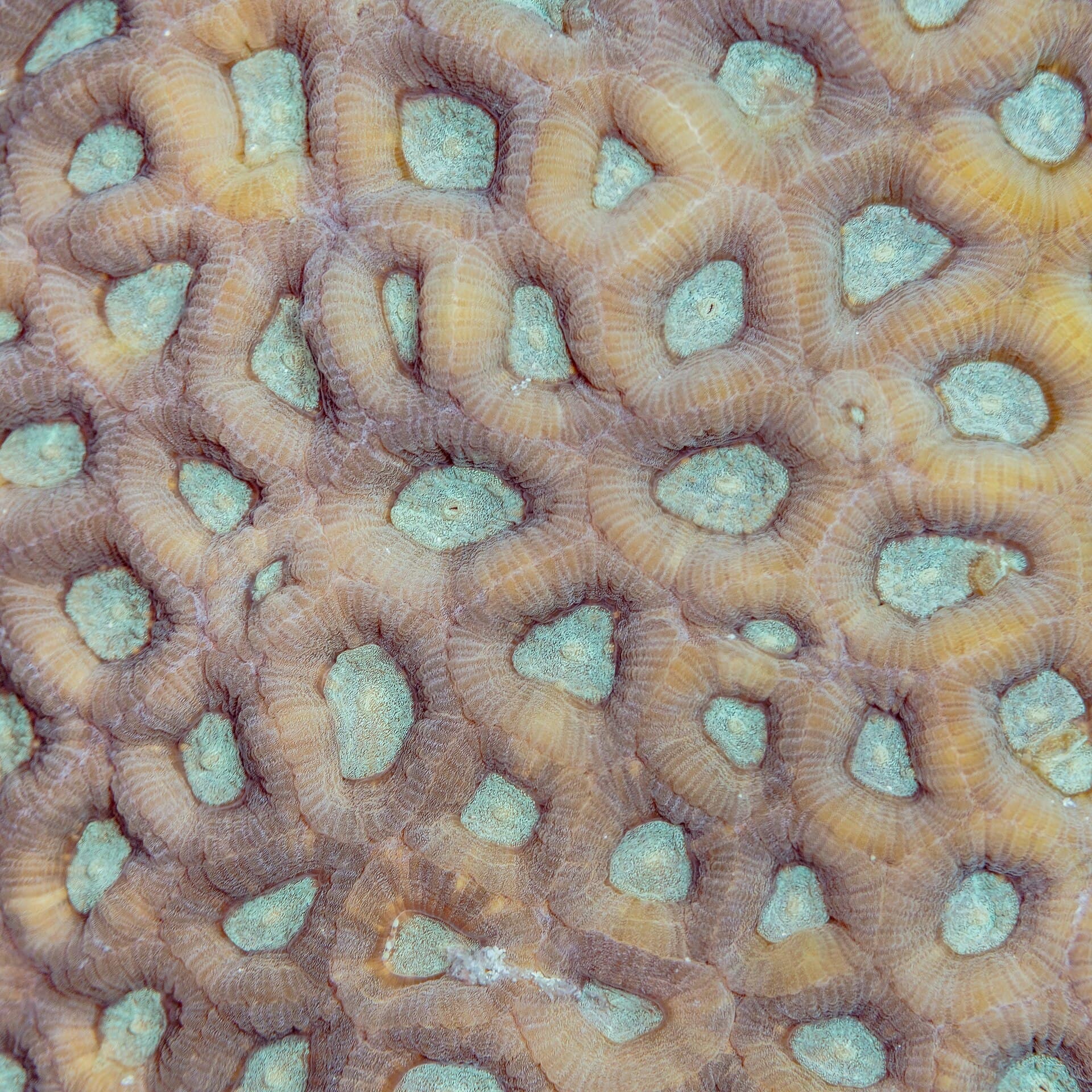
- Classic Favia ID looks for corallites with their own separate walls.
- Classic Favites ID looks for neighboring corallites that share walls.
- This distinction is difficult when tissue is inflated, lighting is blue, or the photo lacks skeletal detail.
- Use cautious labels such as Favia-type or Favites-type when a photo cannot clearly show wall structure.
The core difference is wall structure
The practical hobby shortcut is simple: Favia-type corals are often described as having corallites with separate walls, while Favites-type corals are often described as having shared walls between neighboring corallites.
The hard part is seeing that clearly in aquarium photos. Inflated tissue, feeding response, shadows, and blue light can obscure the skeleton and make both groups look similar.
Favia vs Favites comparison
| Trait | Favia-type | Favites-type |
|---|---|---|
| Classic wall clue | Corallites appear to have separate walls. | Neighboring corallites appear to share walls. |
| Best photo | Angled image showing valleys and walls clearly. | Angled image showing shared boundaries clearly. |
| Common trap | Inflated tissue hides the wall boundary. | Shadow or glare makes shared walls look separate. |
| Safe label | Favia-type if evidence is incomplete. | Favites-type if evidence is incomplete. |
Photo checklist for Favia and Favites ID
- Take a reduced-blue photo from a slight side angle.
- Look for the boundary between neighboring mouths, not only the color rings.
- Compare a photo when the tissue is less inflated if the coral normally puffs up heavily.
- Keep the label broad if you cannot see whether walls are separate or shared.
Why a cautious label is often better
Brain coral naming in the aquarium trade can be loose, and historical labels may not match updated taxonomy. A single photo rarely proves the exact genus with confidence.
For reef keeping purposes, a careful Favia-type or Favites-type note can still be useful. It records the visual pattern without pretending the photo carries more evidence than it does.
Try Coral Identifier on your own tank photos
Capture a clear photo, review likely matches, and build better coral ID confidence over time.


Coral database
Compare the coral profiles
Continue with the structured identification, lookalike, placement, and care references for the corals discussed in this guide.
Favia
Dipsastraea spp. / Favia spp.
Favia LPS guide for identifying brain-like corallites, choosing low placement with moderate flow, and managing corallite edge recession when kept near Favites and Brain Coral.
Open profile →Favites
Favites spp.
Use this Favites profile to compare shared corallite walls with Favia and Brain Coral, plan conservative spacing, and watch for shared-wall tissue recession under moderate flow.
Open profile →Sources
References and further reading
FAQ
Frequently asked questions
01What is the main difference between Favia and Favites?+
The classic practical difference is corallite wall structure. Favia-type corals are often described with separate walls, while Favites-type corals are often described with shared walls.
02Can I identify Favia vs Favites from color?+
No. Color patterns are not reliable enough. Focus on wall structure, mouth arrangement, and a clear angled photo.
03Why is Favia vs Favites hard in reef tank photos?+
Inflated tissue, blue light, glare, and top-down angles can hide whether neighboring corallites share walls or have separate walls.
04What should I write if I am unsure?+
Use Favia-type, Favites-type, or brain coral-type LPS with a confidence note until clearer skeletal detail is visible.