
Short Answer
- Take normal, reduced-blue, side-angle, and close-up photos before asking for an ID.
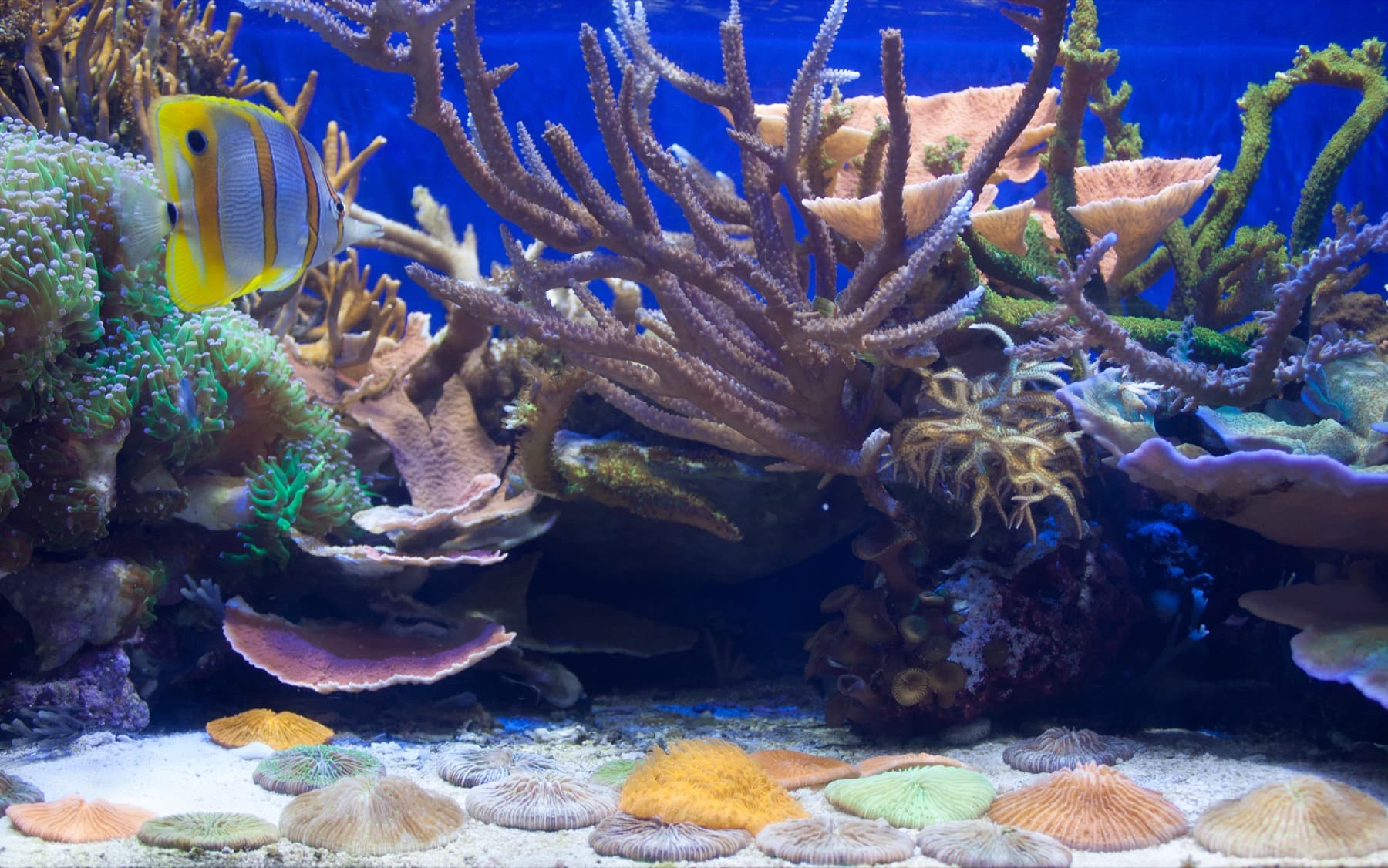
- Classify the coral first as soft, LPS, SPS, zoa/paly, mushroom, or unknown encrusting/plating form.
- Use care context carefully: where it survives can help, but it does not prove identity.
- If the ID affects safety or aggressive placement, follow the more cautious assumption until verified.
First steps before guessing
Unknown coral IDs go wrong when the first answer becomes permanent. The better workflow is to collect evidence first, then narrow from broad group to likely genus or type.
Write down where the coral came from, how long it has been in the tank, where it is placed, and whether it expands, retracts, encrusts, branches, plates, or spreads.
Unknown coral checklist
| Check | Question to answer | Why it matters |
|---|---|---|
| Skeleton | Is there a hard skeleton or soft tissue only? | Separates many stony and soft coral groups. |
| Growth form | Branching, plating, encrusting, mat, disc, or fleshy head? | Quickly narrows broad category. |
| Polyp shape | Long tentacles, skirts, tiny SPS polyps, or fleshy LPS polyps? | Useful for family-level comparison. |
| Behavior | Does it close, feed, sweep, pulse, or spread? | Adds care and aggression context. |
Risk rules for unknown corals
- If it might be zoa or paly, handle conservatively and avoid cutting or boiling tissue.
- If it might be aggressive LPS, leave extra spacing from neighbors.
- If it might be SPS, avoid repeated large parameter swings and take growth photos.
- If it is an unknown hitchhiker, verify it is coral before treating it as desirable.
What to do in the first 24 hours
- Do not cut, glue, dip, or move the coral repeatedly just to get a better label.
- Place it where tissue is not touching neighbors while you collect evidence.
- Take photos before and after the coral opens, because closed tissue hides the strongest clues.
- Write the source of the coral down immediately; store, friend, hitchhiker, or old tank transfer changes the confidence context.
How to use AI for an unknown coral
AI is useful for the first shortlist: likely soft coral, LPS, SPS, zoa, mushroom, or encrusting coral. The final confidence should come from matching visible traits, not from the first label returned.
If two outputs are plausible, keep both in your notes and re-photograph after the coral has grown or opened more clearly.
Try Coral Identifier on your own tank photos
Capture a clear photo, review likely matches, and build better coral ID confidence over time.
Identify on the App StoreSources
References and further reading
FAQ
Frequently asked questions
01How do I identify an unknown coral in my tank?+
Start broad: hard or soft, growth form, polyp shape, skeleton clues, and behavior. Then compare likely groups with clear photos.
02Should I move an unknown coral?+
Only if there is a clear risk such as aggression, tissue damage, or poor placement. Repeated moves can make identification harder by keeping the coral stressed.
03Can AI identify an unknown coral?+
AI can suggest likely groups or genera, but you should verify with visible morphology and better photos.
04What if the coral was mislabeled by a store?+
Keep the store label as sold as, then add your likely ID and confidence level based on visible evidence.