
Short Answer
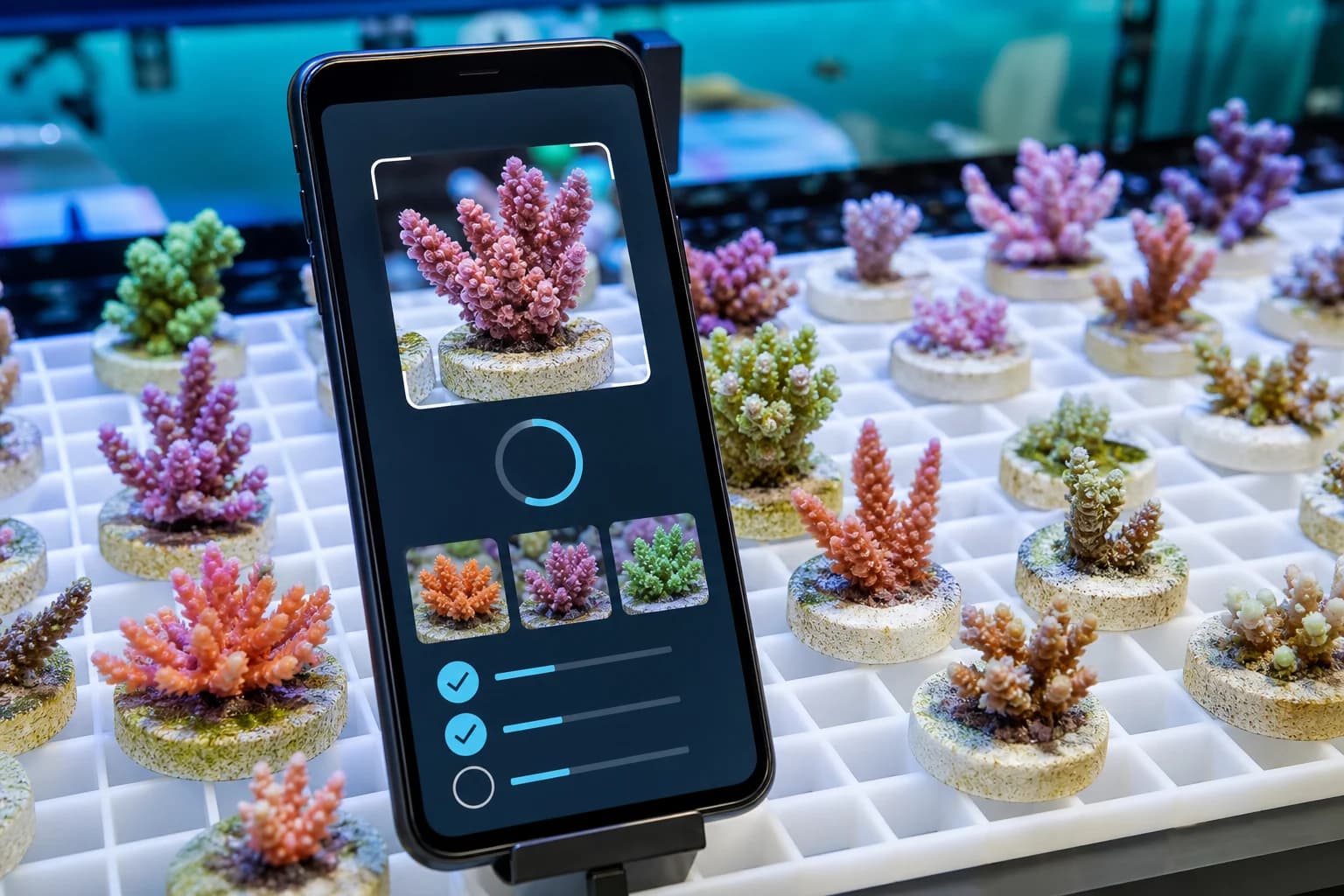
- The best free first step is a coral-specific scan that gives likely matches and uncertainty context.
- Community platforms and reef forums can help, but the answer quality depends on photo quality and who responds.
- Generic visual search can be useful for broad clues, but it is usually weaker for coral care decisions.
- Free should not mean careless: verify before changing placement, light, flow, or buying decisions.
Quick answer
Start with one free coral-specific scan, then verify with better photos and references. Free tools are best used for shortlists, not final certainty.
If a free app always gives one confident species name from a blue-light frag photo, treat that as a warning sign. A cautious free result is more useful than a dramatic but unsupported answer.
Free coral ID options compared
| Option | What it is good for | Where it struggles | Best use |
|---|---|---|---|
| Coral Identifier free scan | Quick likely matches for reef tank coral photos. | Still depends on photo quality and visible traits. | First-pass shortlist for an unknown coral. |
| iNaturalist or community nature apps | Community input and wild observation context. | Aquarium trade names and store frags may not fit the observation model well. | Wild organisms or community review. |
| Reef forums and social groups | Human experience and discussion around difficult cases. | Answers vary by respondent and can repeat common hobby myths. | Second opinion after you post clear photos. |
| Generic visual search | Broad visual clues and image similarity. | Often lacks reef care context and uncertainty handling. | Fallback when coral-specific tools are inconclusive. |
| Taxonomy references | Scientific verification and deeper learning. | Not an instant photo scanner and may be hard for beginners. | Checking a narrowed shortlist. |
What free tools do well
- Turn a mystery coral into a shorter list of likely groups.
- Help beginners learn terms such as LPS, SPS, zoanthid, mushroom, wall, branch, and plating.
- Expose weak photos before the user trusts a bad result.
- Give enough direction to know what reference or community question to use next.
Where free tools struggle
- Many free workflows are not coral-specific and may miss aquarium context.
- Community answers can conflict, especially with trade names and color morphs.
- Generic scanners may confuse coral tissue, live rock, algae, and skeleton texture.
- Free trials or scan limits can make it hard to compare repeated photos over time.
How to test free apps
- Start with five corals you already know before using the app on a mystery frag.
- Use one normal display-light photo and one reduced-blue photo of the same coral.
- Check whether the app returns stable broad groups across lighting changes.
- Treat a confident rare species claim from one small frag as a warning sign.
- Keep the app that gives the most useful next step, not the most dramatic label.
Best free workflow
- Take three photos: normal tank lighting, reduced-blue lighting, and a side angle.
- Run one coral-specific scan for likely matches.
- Compare the top candidates against visible structure.
- Ask for community feedback only after you can show clear photos and your candidate shortlist.
- Use conservative care guidance until the ID is stronger.
Try Coral Identifier on your own tank photos
Capture a clear photo, review likely matches, and build better coral ID confidence over time.


Sources
References and further reading
FAQ
Frequently asked questions
01What is the best free coral identifier app?+
The best free option is the one that gives useful likely matches, explains uncertainty, and works on your own reef tank photos. Coral Identifier is built for that coral-specific first pass.
02Are free coral ID apps accurate?+
They can be useful for shortlists, but accuracy depends on photo quality, visible traits, and whether the app is actually coral-specific.
03Can I identify coral for free without an app?+
Yes. Clear photos, reef forums, community feedback, and taxonomy references can help. The tradeoff is that the process may take longer and require more manual comparison.
04Should I pay for a coral ID app?+
Only after testing the free workflow on known corals. Pay if the app saves time, handles uncertainty well, and improves your decisions on real photos.