
Short Answer
- Large fleshy polyps often point toward LPS; tiny polyps on rigid branches often point toward SPS.
- Skirted button polyps suggest zoa/paly-type corals.
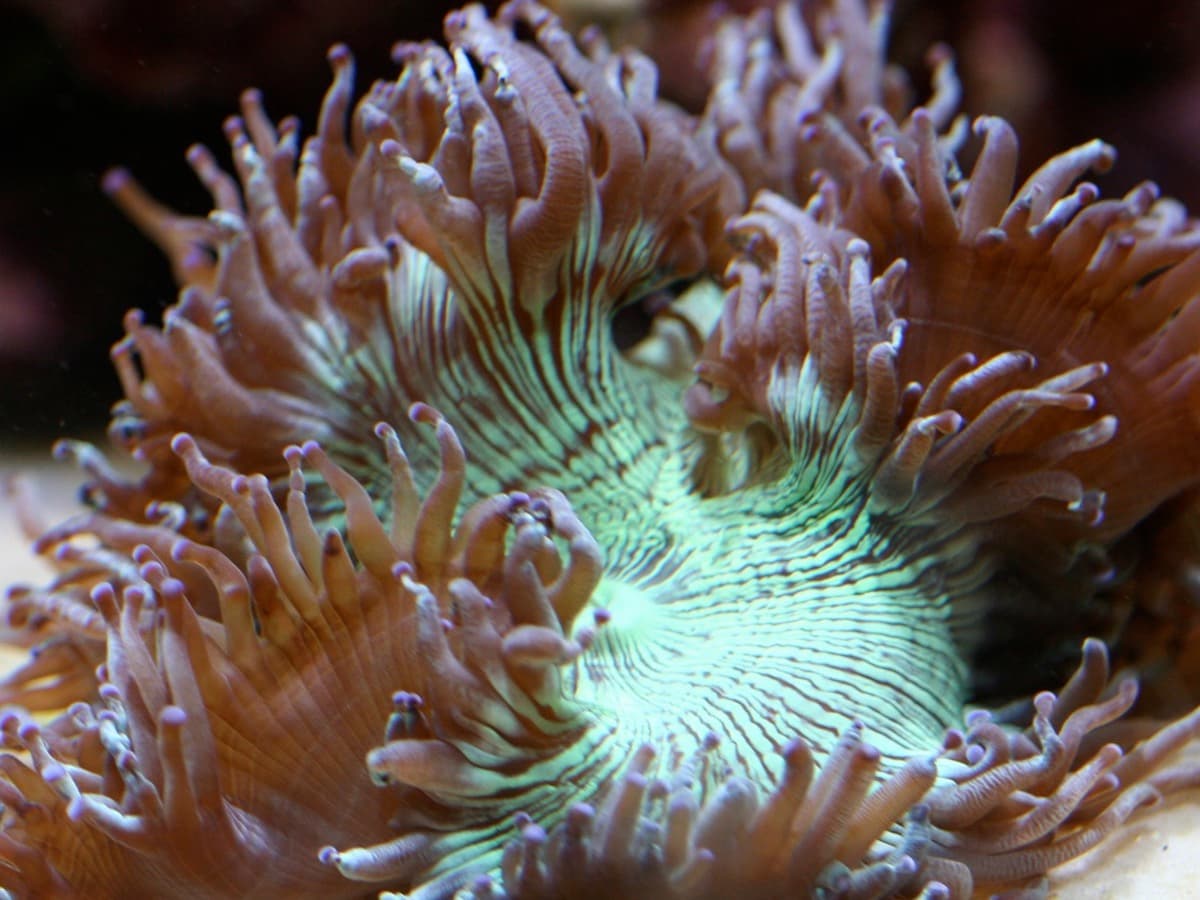
- Bubble-like disc texture suggests Ricordea or other mushroom comparisons.
- Polyp shape changes with flow, light, feeding, and stress, so use multiple photos.
Why polyp shape matters
A coral polyp includes a mouth and tentacles, and the skeleton or tissue around it creates many of the visual patterns reef keepers use for ID.
Polyp shape is not enough by itself, but it is one of the fastest ways to separate broad groups before checking skeleton or growth form.
Polyp shape clues
| Polyp clue | Likely direction | Photo caution |
|---|---|---|
| Tiny polyps on branches | SPS such as Acropora or Montipora. | Need corallite detail too. |
| Large fleshy heads | LPS such as Duncan, candy cane, or Euphyllia. | Closed tissue can hide head shape. |
| Skirted buttons | Zoanthids or palythoas. | Size and mat thickness still matter. |
| Disc with bumps | Mushroom, Ricordea, or Rhodactis. | Texture needs reduced-blue lighting. |
Useful numbers and patterns
- Goniopora is commonly described with 24 tentacles per polyp; Alveopora is commonly described with 12.
- Octocorals characteristically have eight tentacles, which helps explain some soft coral anatomy.
- SPS polyps are small, but the skeleton around them often carries the stronger ID evidence.
- LPS polyps can expand far beyond the skeleton, which can hide wall or corallite structure.
When counts help and when they mislead
Tentacle counts are useful in a few famous comparisons, but most aquarium photos are not clean enough for counting to be the only evidence.
- Use counts when the coral is fully open and the photo is sharp.
- Do not count tentacles in heavy flow or during feeding response.
- Combine counts with growth form, skeleton, and colony behavior before making a confident label.
Where AI helps with polyp shape
AI can help point out which polyp features matter, but the photo must show open polyps. Closed, blurry, or high-flow images often need a retake before the ID should be trusted.
Try Coral Identifier on your own tank photos
Capture a clear photo, review likely matches, and build better coral ID confidence over time.
Identify on the App StoreSources
References and further reading
FAQ
Frequently asked questions
01Can coral polyps identify a coral?+
Polyp shape can narrow the likely group, but final confidence usually needs growth form, skeleton clues, and context.
02What does a coral polyp include?+
A coral polyp includes a mouth surrounded by tentacles. In stony corals, the polyp sits in or over skeletal structures.
03Why do polyps look different at night?+
Many corals extend feeding tentacles more at night, so night photos may show behavior that daytime photos hide.
04Should I identify coral by tentacle count?+
Tentacle count is useful in some comparisons, such as Goniopora vs Alveopora, but it is not a universal coral ID rule.