
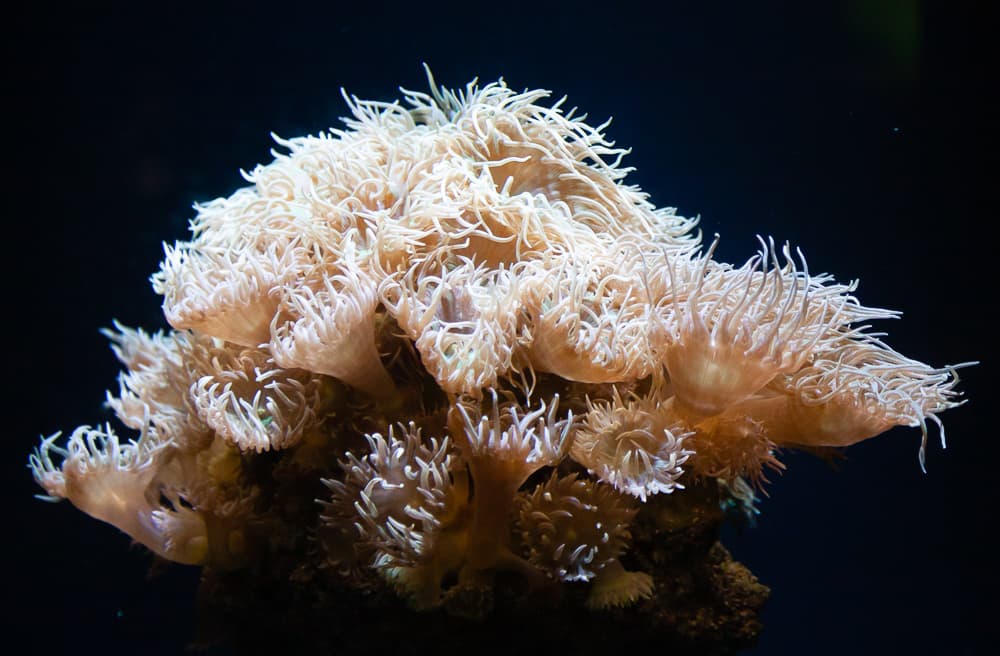
Short Answer
- A good Duncan coral starting zone is moderate light, often around 75-150 PAR, with gentle-to-moderate indirect flow.
- Feed small meaty foods 1-2 times per week if nutrients and filtration can handle it.
- Healthy growth often appears as new heads budding near the base or sides of older heads.
- If a Duncan stays closed, check flow, recent handling, salinity swings, pests, and nearby coral aggression before moving it repeatedly.
Duncan coral placement
Duncan coral usually does best where it can open fully without being blasted. The tentacles should move gently, not whip flat or collect debris.
Start in a moderate area and avoid moving it every day. Duncans often need time to adjust after shipping, dipping, or placement changes.
Duncan coral care starting points
| Care factor | Practical starting point | Warning sign |
|---|---|---|
| Light | Moderate, often 75-150 PAR. | Bleaching, shrinking, or stretching. |
| Flow | Gentle-to-moderate indirect flow. | Tentacles pinned down or debris collecting. |
| Feeding | Small meaty food 1-2 times weekly. | Nutrients rising or food rotting. |
| Spacing | Leave room for expansion and neighbors. | Retraction near aggressive corals. |
How to feed Duncan coral
- Use small foods that fit the mouth; avoid forcing oversized chunks.
- Turn down flow briefly if food is blown away, then restore circulation.
- Feed lightly once or twice per week rather than heavily every day.
- Watch nitrate and phosphate trends if target feeding increases.
Duncan coral closed: what to check first
| What you observe | Likely check | Low-risk next step |
|---|---|---|
| Closed after shipping, dipping, or moving | Recent handling stress. | Keep conditions stable and observe before moving it again. |
| Tentacles pinned in one direction | Direct or excessive flow. | Redirect flow so the polyps sway rather than flatten. |
| Open at night but closed during the day | Fish or shrimp may be irritating it. | Observe the tank before changing placement or flow. |
| Only nearby heads stay closed | Contact, shading, or coral aggression. | Inspect spacing and nighttime sweeper reach. |
| Tissue recession or exposed skeleton | Damage, instability, or a health problem. | Check salinity and alkalinity trends, then inspect closely for pests or injury. |
Feeding amounts that keep the coral clean
| Situation | Practical amount | What to avoid |
|---|---|---|
| Small single-head frag | One tiny meaty piece occasionally. | Large food that sits on tissue. |
| Multi-head colony | Small pieces spread across a few open heads. | Feeding every head heavily every day. |
| Recovering coral | Only feed if it captures food cleanly. | Forcing food into a closed or stressed polyp. |
Growth signs and common problems
New Duncan heads often appear as small buds near the base or sides of existing heads. A stable coral can add heads steadily, but growth speed depends on light, feeding, nutrients, alkalinity stability, and tank maturity.
If the coral will not open, avoid immediately moving it through several locations. First check recent salinity change, flow direction, nearby stinging corals, pests, and whether fish or shrimp are irritating it.
Try Coral Identifier on your own tank photos
Capture a clear photo, review likely matches, and build better coral ID confidence over time.
Identify on the App StoreSources
References and further reading
FAQ
Frequently asked questions
01Where should I place Duncan coral?+
Start Duncan coral in moderate light and gentle-to-moderate indirect flow. The polyps should sway without being blasted.
02How often should I feed Duncan coral?+
Many reef keepers feed small meaty foods once or twice per week. Feeding is useful, but overfeeding can raise nutrients.
03Why is my Duncan coral not opening?+
Check flow, recent handling, salinity swings, pests, fish irritation, and nearby coral aggression before moving it repeatedly.
04Is Duncan coral good for beginners?+
Yes, Duncan coral is often a good beginner LPS when the tank is stable and the coral gets moderate light, indirect flow, and enough space.