
Short Answer
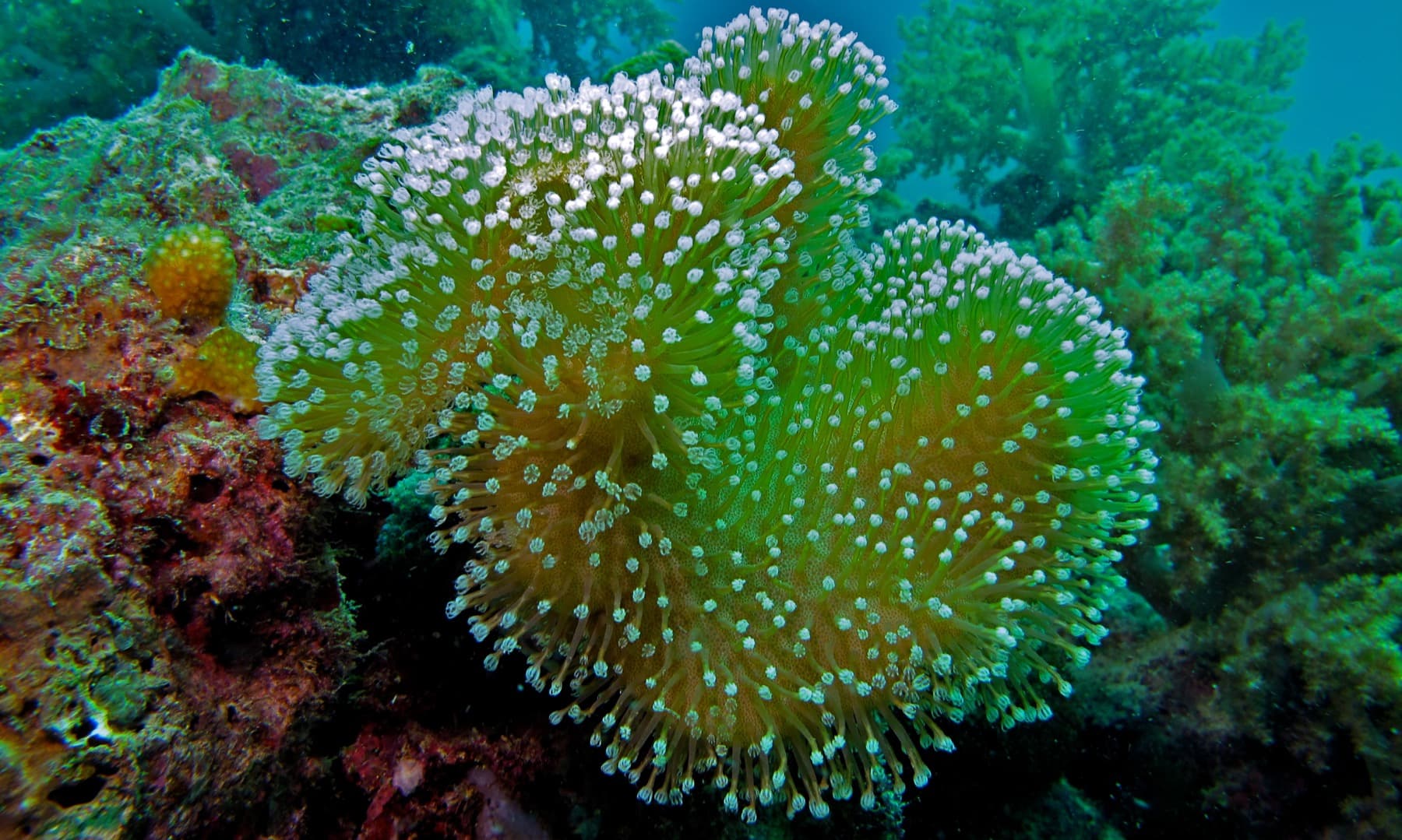
- Toadstool leathers usually show a stalk and cap, often with visible polyps on the cap.
- Finger leathers grow upright lobes or branches with a flexible soft-coral texture.
- Cabbage leathers form folded, ruffled, or lobed sheets rather than a single cap.
- Periodic shedding is normal for many leather corals and can temporarily hide ID traits.
Start with the leather coral shape
Leather corals can close, shed, and change texture, so a single bad photo can be misleading. The most useful first clue is the overall body plan: cap, fingers, lobes, sheets, or ruffles.
A toadstool-style leather has a stalk and broad cap. Finger leathers form flexible upright projections. Cabbage leathers usually form ruffled sheets or lobed plates.
Common leather coral types
| Type | Visual signal | Care note |
|---|---|---|
| Toadstool leather | Stalk plus broad cap. | Often extends fine polyps after settling. |
| Finger leather | Upright flexible fingers or lobes. | Likes enough flow to keep tissue clean. |
| Cabbage leather | Ruffled, folded, or lobed sheets. | Can collect detritus in folds if flow is weak. |
| Devil's hand type | Thicker lobed hand-like shape. | May stay closed during shedding or adjustment. |
Care context and numbers
- Many leather corals tolerate low-to-moderate or moderate light, often around 75-200 PAR as a broad starting zone.
- Moderate varied flow helps remove mucus and shedding film.
- Leathers may stay closed for several days while shedding; this does not automatically mean the ID is wrong.
- Chemical interaction is possible in mixed reefs, so carbon and spacing can help when leathers share a tank with stony corals.
Shedding, closure, and stress can change the ID photo
Leather corals can close for days and shed a waxy surface film. During that period, the coral may look smoother, duller, or smaller than usual, which makes photo identification weaker.
- A short closure after a move can be normal for leathers.
- A persistent film with no flow over the surface can delay reopening.
- Tissue decay, foul smell, or collapsing structure is not normal shedding and should be treated as a health issue.
Where AI helps with leather corals
AI can help separate toadstool, finger, cabbage, and other soft coral shapes, especially when the coral is open. It is less useful during shedding, when the surface may look waxy, closed, or collapsed.
Try Coral Identifier on your own tank photos
Capture a clear photo, review likely matches, and build better coral ID confidence over time.
Identify on the App StoreSources
References and further reading
FAQ
Frequently asked questions
01How do I identify a leather coral?+
Start with the body shape: stalk and cap for toadstool, upright branches for finger leathers, and ruffled sheets for cabbage leathers.
02Why is my leather coral closed?+
Leather corals often close during shedding, adjustment, irritation, or flow changes. Retake ID photos when the coral is open again.
03Do leather corals need feeding?+
Most common photosynthetic leathers do not need heavy target feeding. Stable light, flow, and nutrients are usually more important.
04Are leather corals good for beginners?+
Many common leathers are beginner-friendly, but they still need stable salinity, appropriate flow, and space from sensitive corals.