
Short Answer
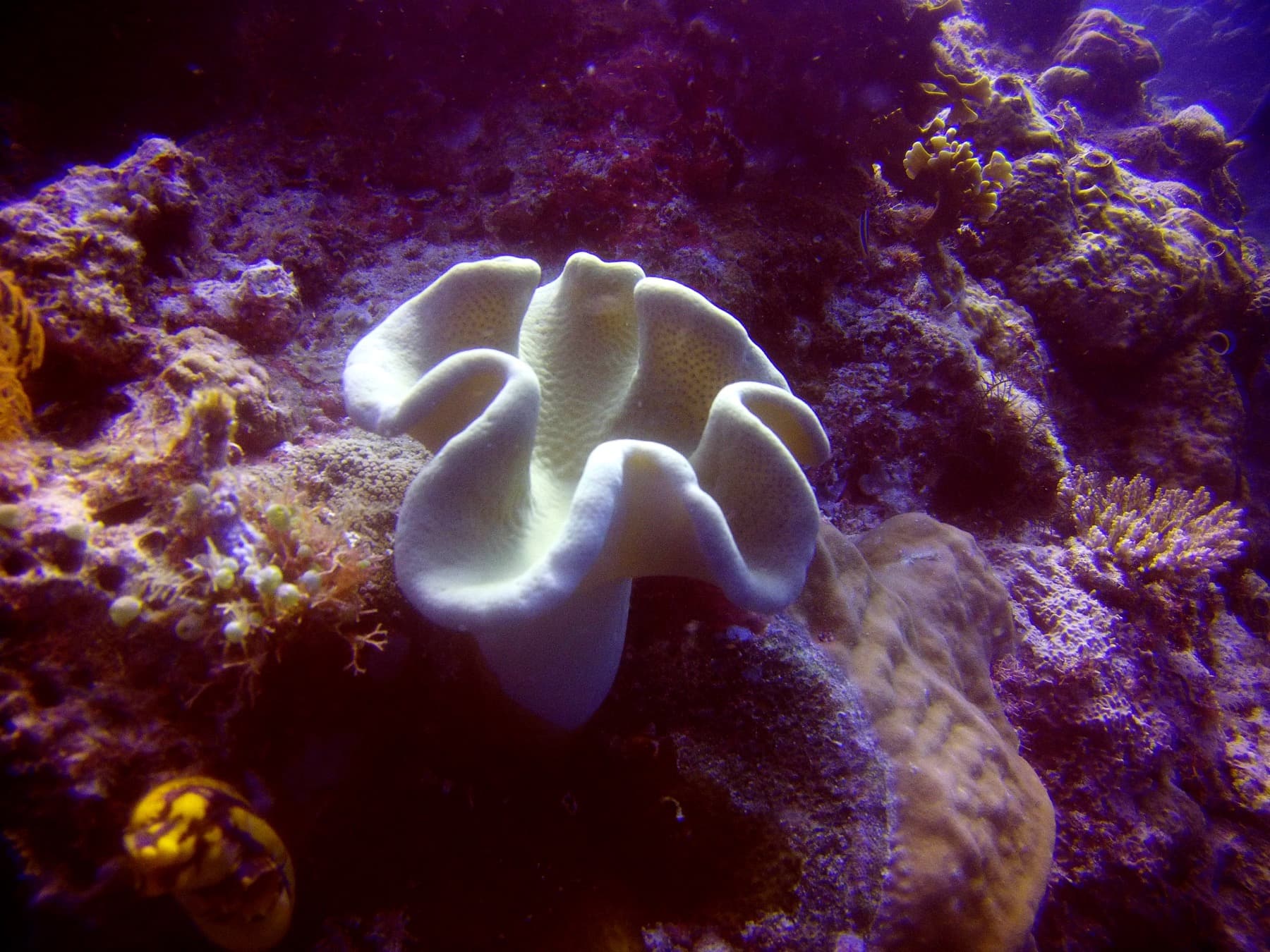
- Soft corals are often identified by body form: mat, disc, stalk, leather, branch, or pulsing colony.
- Leathers, mushrooms, zoas, palys, cloves, Xenia, GSP, and gorgonians can all appear in beginner reef tanks.
- Many common soft corals tolerate moderate nutrients better than demanding SPS, but stability still matters.
- Some soft corals spread quickly, so identification should include growth behavior and containment planning.
Common soft coral groups
Soft coral is a broad hobby category. It includes easy spreading mats, disc-like mushrooms, leather corals, zoa/paly colonies, pulsing Xenia, clove polyps, and some gorgonian-style branching corals.
The ID question is usually not just what is it, but how will it grow in my tank. Some soft corals are forgiving, but many can spread aggressively.
Soft coral type comparison
| Group | Visual signal | Growth behavior |
|---|---|---|
| Mushrooms | Disc-shaped soft bodies. | Can split or detach and spread. |
| Leathers | Stalks, caps, fingers, or lobes. | Grow larger and may shed surface film. |
| Zoas and palys | Button polyps with oral discs and skirts. | Spread by mat or colony growth. |
| GSP/cloves/Xenia | Mat or stalked polyps, sometimes pulsing. | Can spread quickly across rock. |
Soft coral care context
- Many common soft corals do well in low-to-moderate or moderate light, often 50-200 PAR depending on type.
- Flow should keep tissue clean without preventing extension.
- Soft corals often tolerate more nutrient-rich water than many SPS, but unstable salinity or alkalinity can still cause stress.
- Fast spreaders should be isolated on separate rocks if you do not want them taking over.
Spread control changes the practical ID value
For soft corals, the name matters because it predicts behavior. A forgiving coral that spreads across the main rockwork can become a maintenance problem even if it is easy to keep alive.
- Use isolated rocks for fast mat-forming corals such as GSP or cloves.
- Give mushrooms room if they detach and reattach in nearby crevices.
- Treat pulsing or creeping colonies as placement decisions, not just beginner corals.
Try Coral Identifier on your own tank photos
Capture a clear photo, review likely matches, and build better coral ID confidence over time.


Coral database
Compare the coral profiles
Continue with the structured identification, lookalike, placement, and care references for the corals discussed in this guide.
Leather Coral
Sarcophyton spp. / Sinularia spp. / Lobophytum spp.
Leather Coral soft coral guide focused on soft flexible body, lookalike separation from Toadstool Leather and Kenya Tree Coral, and early checks for closure, shedding, or tissue slump before changing light or flow.
Open profile →Cabbage Leather Coral
Sinularia dura
Cabbage Leather Coral soft coral guide focused on folded cabbage-like lobes, lookalike separation from Leather Coral and Finger Leather Coral, and early checks for closure, shedding, or tissue slump before changing light or flow.
Open profile →Green Star Polyps
Pachyclavularia violacea / Briareum violaceum
Green Star Polyps soft coral guide for identifying bright green star-shaped polyps, choosing variable placement with moderate flow, and managing closure, shedding, or tissue slump when kept near Clove Polyps and Xenia.
Open profile →Sources
References and further reading
FAQ
Frequently asked questions
01How do I identify soft corals?+
Start with growth form: disc, mat, stalk, leather, branch, button polyp, or pulsing colony. Then compare surface and polyp details.
02Are soft corals good for beginners?+
Many common soft corals are beginner-friendly, but fast spreaders need placement planning and stable basic water conditions.
03Do soft corals need feeding?+
Most common photosynthetic soft corals do not need heavy target feeding. Light, flow, and stable nutrients usually matter more.
04Can soft corals take over a tank?+
Some can spread quickly, especially GSP, Xenia, cloves, and some mushrooms. Isolate them if you want control.