
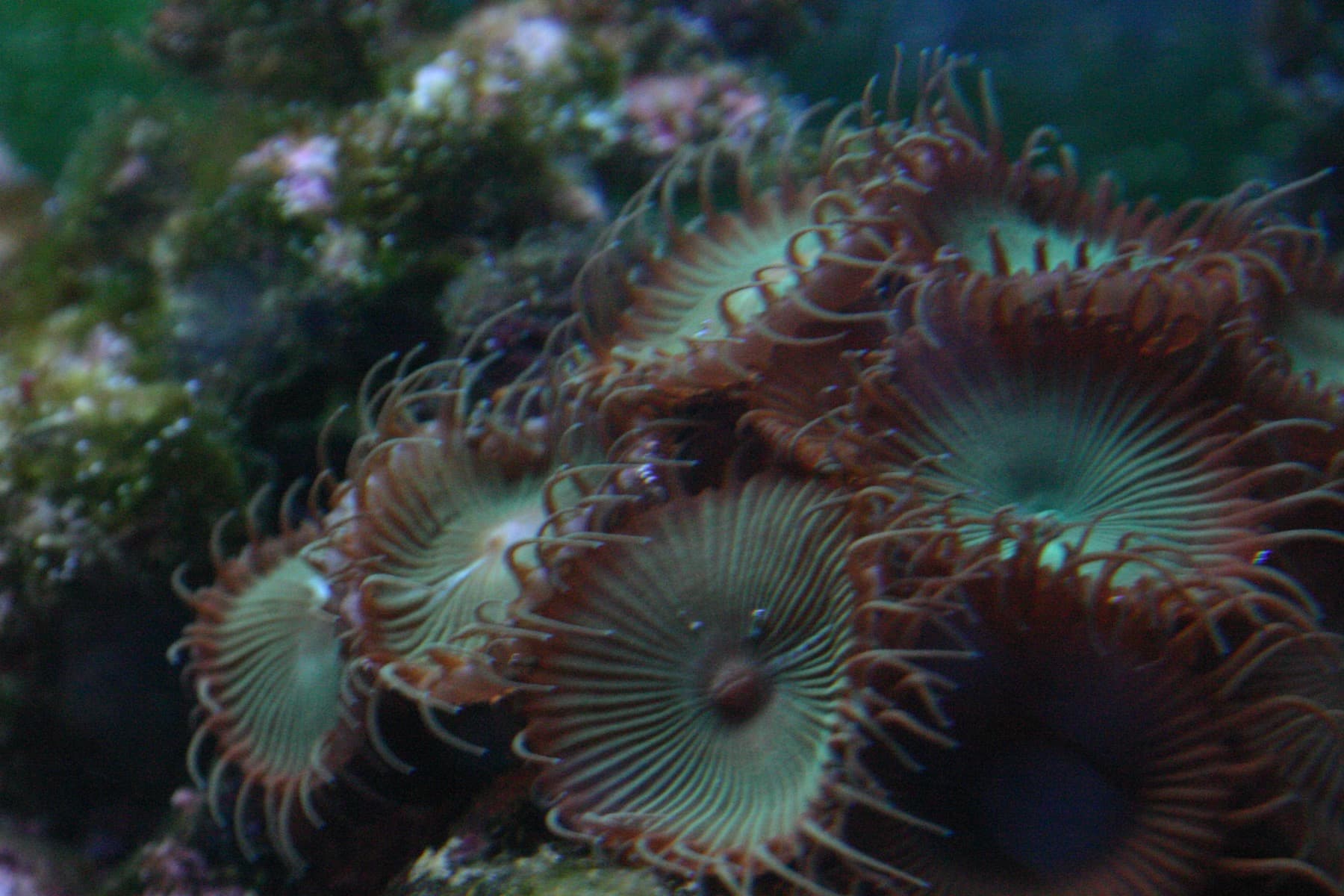
Short Answer
- Zoanthids are often smaller, tighter, and connected by a thinner mat.
- Palythoas are often larger, meatier, and may appear embedded in a thicker mat that can trap sand or debris.
- The distinction is not always clean from photos, so use cautious labels when evidence is mixed.
- Handle both groups carefully; do not cut, boil, scrub, or expose zoa/paly tissue without protection and ventilation.
The practical differences to compare
In hobby use, zoas usually means smaller button-like polyps with colorful oral discs and visible skirts. Palys often means larger polyps with thicker tissue and a colony mat that can look more leathery or embedded.
These are practical clues, not perfect taxonomy. Many store labels use zoa and paly loosely, so a photo should lead to a confidence note rather than a hard claim when the colony is ambiguous.
Quick answer: zoa or paly?
A smaller polyp with a thin connecting mat is more zoanthid-like. A larger, fleshier polyp embedded in a thicker mat that holds sand or debris is more Palythoa-like. These clues overlap, so the safest photo-only answer may still be zoa/paly-type.
- Use open polyps and a side angle; closed top-down photos hide the mat.
- Do not use color or designer names as the deciding clue.
- Treat either group cautiously when cutting, removing, or cleaning it.
Zoanthids vs Palythoas comparison
| Trait | Zoanthids | Palythoas |
|---|---|---|
| Polyp size | Often smaller and tighter. | Often larger and meatier. |
| Mat structure | Usually thinner connection between polyps. | Often thicker coenenchyme or embedded look. |
| Surface debris | Less likely to trap sand visibly. | Some palys can incorporate sand or debris in tissue. |
| Trade names | Often sold by color morph names. | Often labeled loosely as paly, button polyp, or grandis-type. |
Safety matters more than winning the label
- Treat both zoas and palys with respect because palytoxin risk is associated with some zoanthid/palythoa groups.
- Wear gloves and eye protection when fragging or removing colonies.
- Never boil, scrub with hot water, or aerosolize colony tissue.
- If you only need an ID, use photos and avoid unnecessary handling.
What not to do when the ID is uncertain
- Do not boil rock, scrub colonies dry, or cut unknown zoa/paly tissue without eye and hand protection.
- Do not assume small polyps are automatically safe zoas and large polyps are automatically dangerous palys.
- Do not use a designer color name as safety evidence; it says little about toxin risk.
- If removal is needed, plan it like a safety task first and an ID task second.
Where AI helps with zoa vs paly ID
AI can help compare oral disc pattern, skirt shape, polyp spacing, and colony mat thickness. It should not be used to decide whether a colony is safe to handle casually.
When the answer is uncertain, label it zoa/paly-type and follow the stricter handling precautions.
Try Coral Identifier on your own tank photos
Capture a clear photo, review likely matches, and build better coral ID confidence over time.


Coral database
Compare the coral profiles
Continue with the structured identification, lookalike, placement, and care references for the corals discussed in this guide.
Zoanthids
Zoanthus spp.
Zoanthids zoanthid guide focused on colonial button polyps, lookalike separation from Clove Polyps and Mushroom Coral, and early checks for closed polyps or irritated mat before changing light or flow.
Open profile →Palythoa
Palythoa spp.
Palythoa care and ID profile for larger button polyps, often embedded in mat with sand grains, closed polyps or irritated mat, and practical placement decisions for mixed reef compatibility.
Open profile →Next steps
Related reef tools
Sources
References and further reading
FAQ
Frequently asked questions
01How can I tell zoanthids from palythoas?+
Compare polyp size, mat thickness, oral disc structure, skirt, and whether the tissue looks embedded or leathery. Palys are often larger and thicker, but photos are not always decisive.
02Are palythoas dangerous?+
Some zoanthid and palythoa groups are associated with palytoxin risk. Handle both cautiously, especially when fragging, scraping, or removing colonies.
03Can zoas and palys be identified by color?+
No. Color morphs are useful for hobby naming after the group is narrowed, but color alone does not reliably separate zoas and palys.
04What is the safest label if I am unsure?+
Use zoa/paly-type with a confidence note and follow careful handling practices.