
Short Answer
- Encrusting describes growth over rock, not a single coral group.
- The growth edge, surface texture, and polyp spacing are the most important clues.
- Cyphastrea, encrusting Montipora, Leptoseris, zoa mats, and some LPS can all encrust.
- Care assumptions should stay conservative until the likely group is clear.
Start with the growth edge
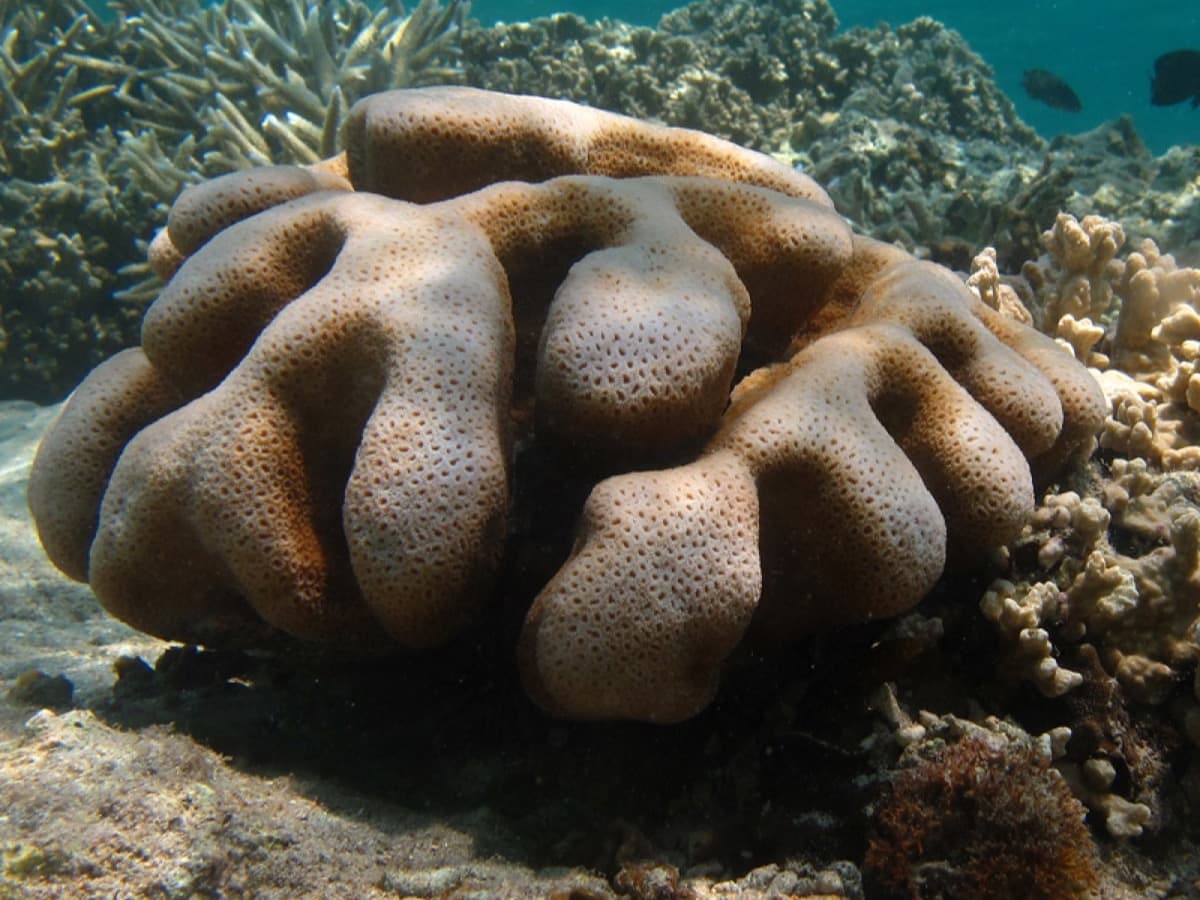
The growth edge shows how the coral spreads. A thin SPS-style rim, a starry bumpy surface, a mat of polyps, or a fleshy LPS edge all point toward different groups.
Do not identify only from the brightest center of the colony. The edge often carries more useful information.
Encrusting coral lookalikes
| Lookalike | Surface clue | Growth clue |
|---|---|---|
| Cyphastrea | Separated star-like polyps. | Spreads as a textured skin. |
| Encrusting Montipora | Small SPS polyps on smoother sheet. | Thin growing rim. |
| Leptoseris-type | Fine delicate texture. | Thin sheets over rock. |
| Zoa/paly mat | Button polyps with skirts. | Mat spreads between polyps. |
Photo checklist
- Show the newest edge where the coral meets bare rock.
- Take a close-up of individual polyps.
- Use reduced-blue light so texture is visible.
- Include enough rock context to show spread pattern.
What different growth edges suggest
- Thin colored rim with tiny polyps: often points toward encrusting SPS comparisons.
- Star-like separated polyps in a textured skin: consider Cyphastrea-type candidates.
- Button polyps connected by tissue: compare zoa or paly mat behavior.
- Fleshy ridge or visible mouths: keep LPS encrusters in the shortlist.
Try Coral Identifier on your own tank photos
Capture a clear photo, review likely matches, and build better coral ID confidence over time.
Identify on the App StoreSources
References and further reading
FAQ
Frequently asked questions
01What is an encrusting coral?+
An encrusting coral grows across a surface such as rock or a frag plug instead of growing primarily upward as branches or heads.
02How do I identify an encrusting coral?+
Inspect the growth edge, polyp spacing, surface texture, and whether the tissue looks SPS-like, LPS-like, or soft.
03Can zoanthids be encrusting?+
They can spread as mats over rock, but they are usually identified by button polyps and skirts rather than stony surface texture.
04Why is my encrusting coral hard to identify?+
Many groups encrust, and small frags may not show mature surface or edge traits yet.